Meta Learn
A brand-new design system, rebuilt from the ground up for clarity.
84 SUS usability score, up from 52. Now above the industry benchmark.
2.1× faster task completion across the five core flows.
+71% 30-day retention after the redesign launched.
An 80-component design system, documented and App Store ready.
Onboarding cut from 11 steps to 3 — value before commitment.
Problem
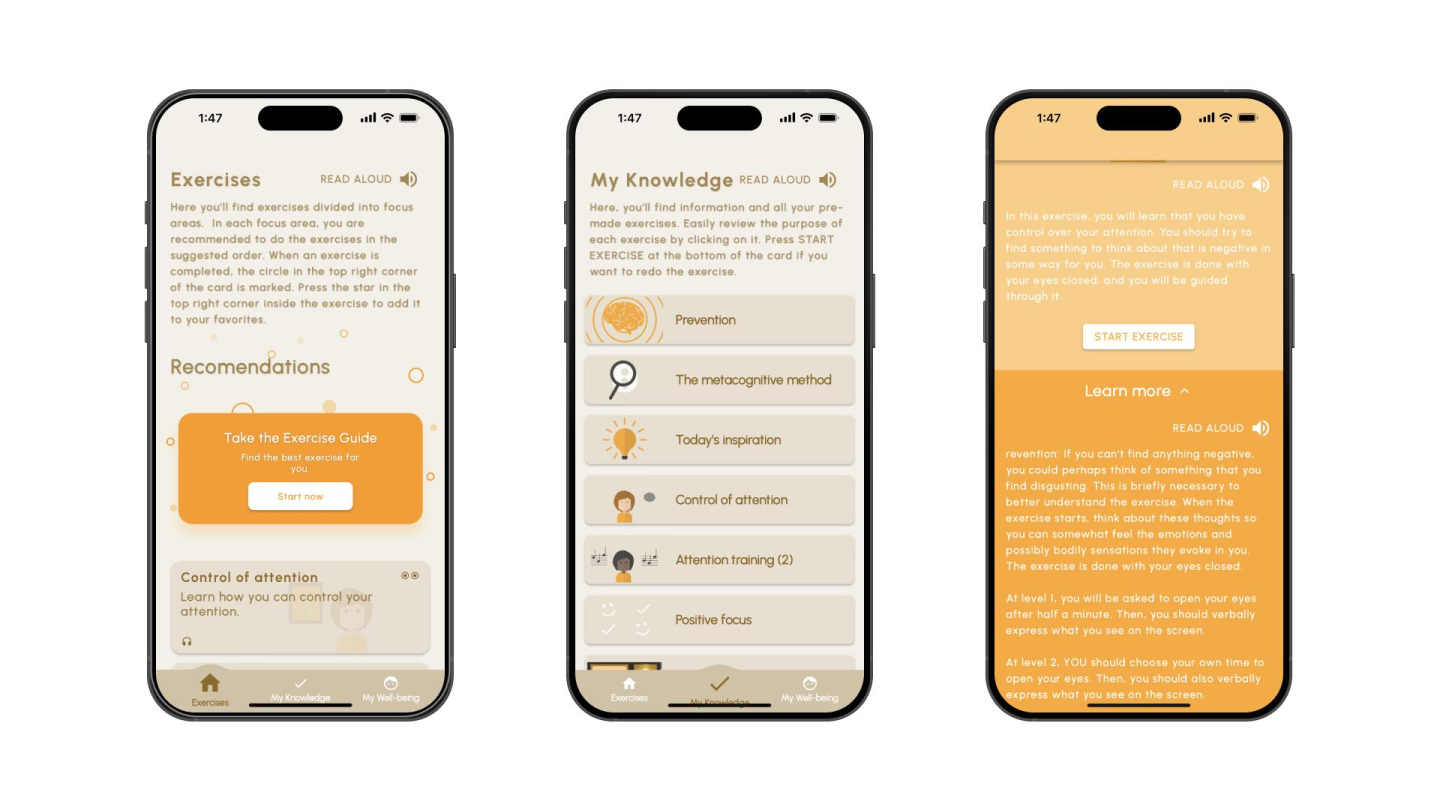
The original Meta Learn had the right ingredients — science-backed exercises, quality programs, genuine expertise in mental fitness. But none of it was reachable. Critical features were buried two or three levels deep. Navigation created dead ends. Progress tracking was invisible. Users dropped off before they ever found what they came for.
The redesign didn't change the content. It changed everything around it.
Research
Usability testing
Finding what to do next was a dead end.
Users hit navigation walls trying to discover new exercises. The content was there — the path wasn't.
Analytics
Progress was invisible.
Users couldn't tell if they were improving, building habits, or falling behind. Motivation had no anchor.
Heuristic evaluation
The best features were buried.
Professionals needed quick wins. The features that could deliver them were two or three taps too deep.
User surveys
Onboarding created drop-off before value.
The 11-step setup asked for commitment before delivering anything worth committing to. 68% quit before finishing.
User interviews
Professionals wanted quick wins.
Time-pressed users came for fast, science-backed sessions they could fit between meetings — but the shortcuts they needed were buried in the menus.
SUS testing + benchmarking
Usability scored in the “poor” band.
The original app benchmarked at 52 — well below the 68-point industry average, putting it squarely in the “poor” range.
Desk research
Habits are built on cues and rewards.
The cognitive-training literature is consistent: engagement thrives on habit cues, streaks, and rewards — exactly the loops the original app was missing.
Goals
Structure &
Scalability
Flow &
Onboarding
Visual System
Process
Dozens of low-fidelity screens mapped the full experience before a single pixel was polished.
Validation
Before a single pixel was polished, the wireframes went in front of real users. Early signals confirmed the new structure was working.
9/10
Found key features unaided
up from 3 of 10 on the old app
Moderated wireframe test, n=10
2taps
To reach any core exercise
down from 4–5 taps
Task-based walkthrough
0
Dead ends hit
across every tested flow
First-click & navigation test
Quick, moderated tests on the low-fidelity wireframes — early validation, well before visual design.
Design
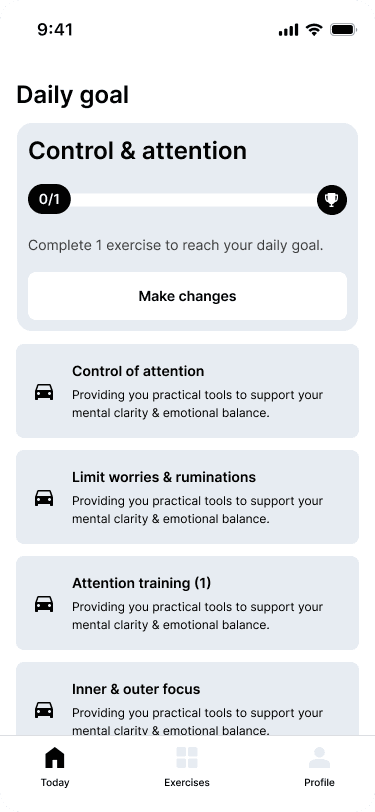
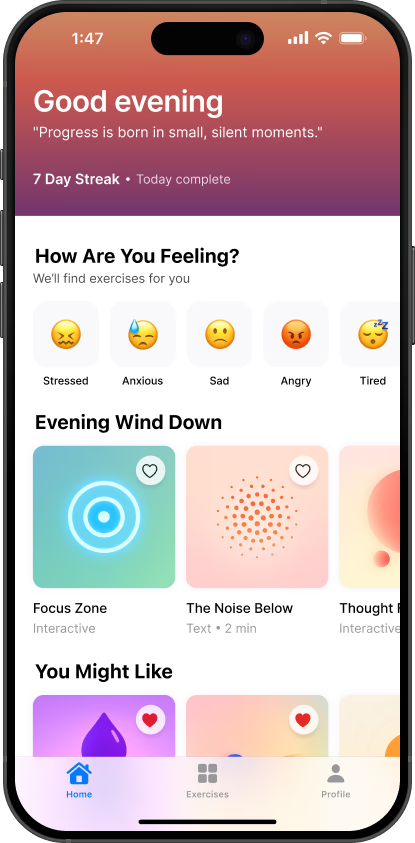
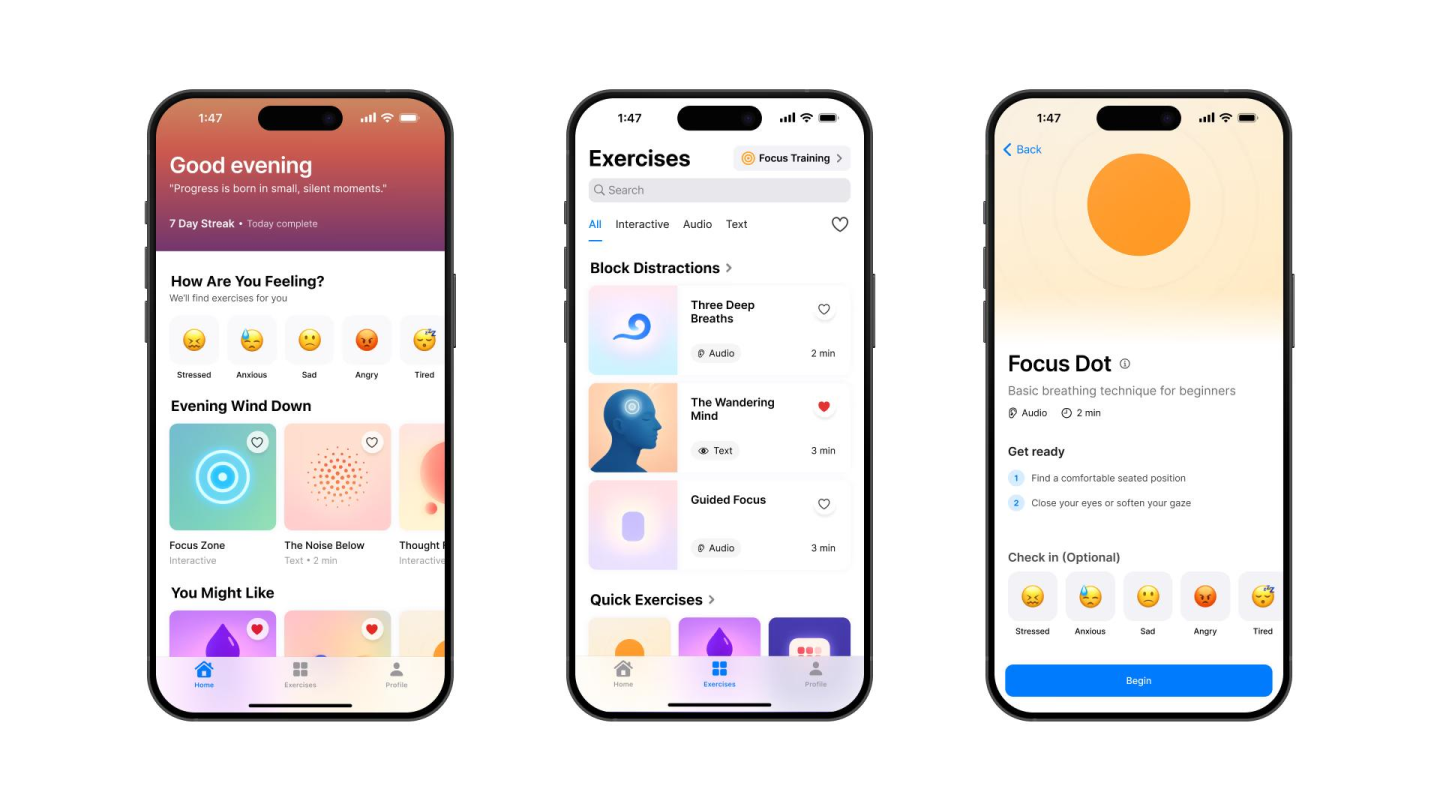
Greeting, quote & streak
A quick boost of motivation with your daily progress in view.
Emotional slider
Pick how you feel and get exercises that match your current mood.
Tailored content
Curated exercises based on time of day and what you've done before.

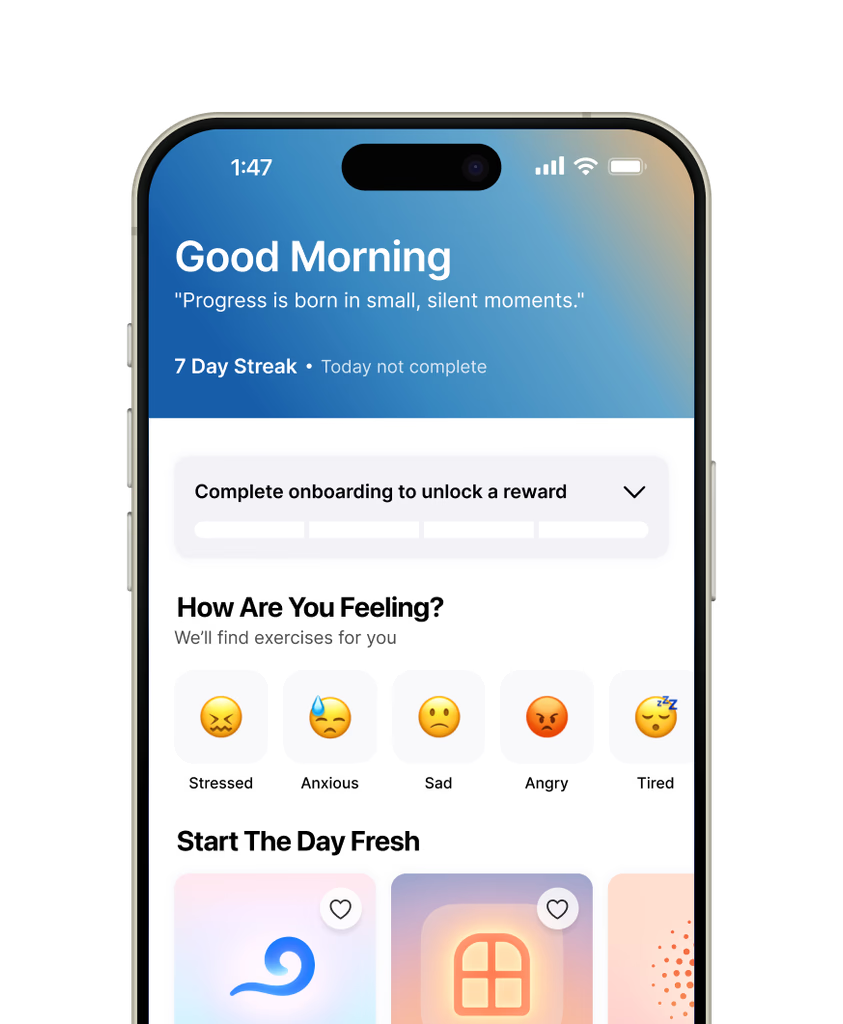
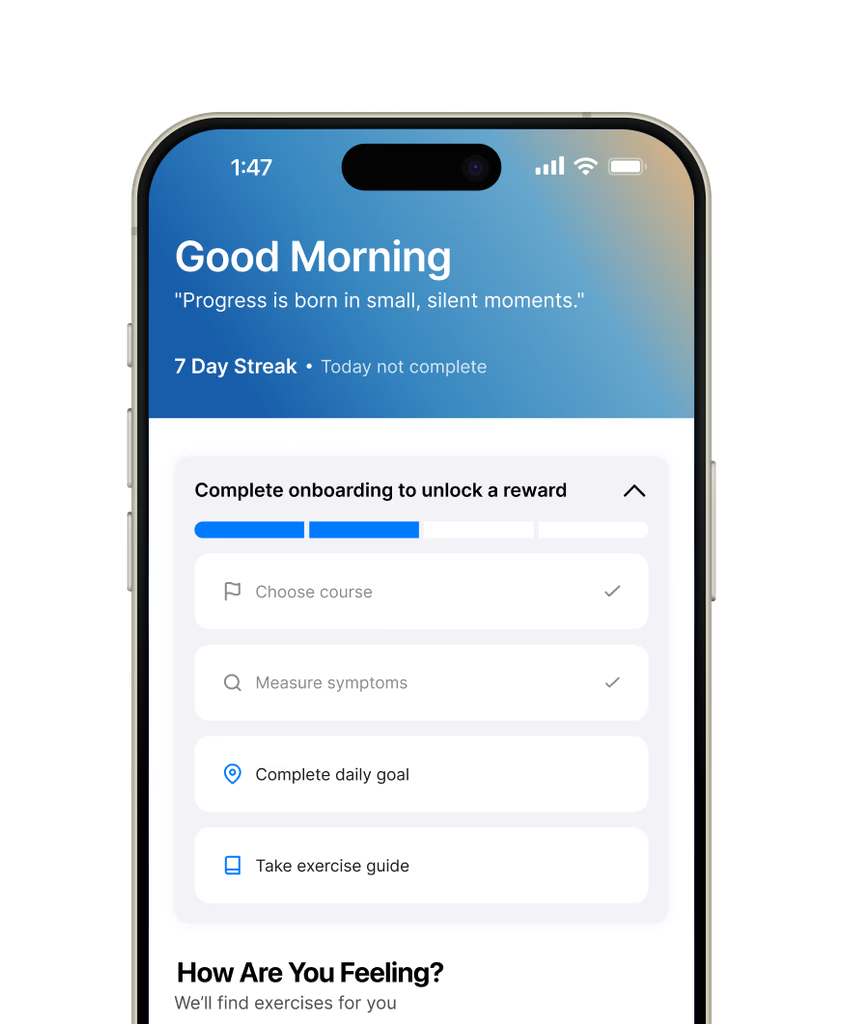
Non-Intrusive
Onboarding is built into the home screen. Do it anytime.

Motivating
Complete tasks in any order while exploring the app.

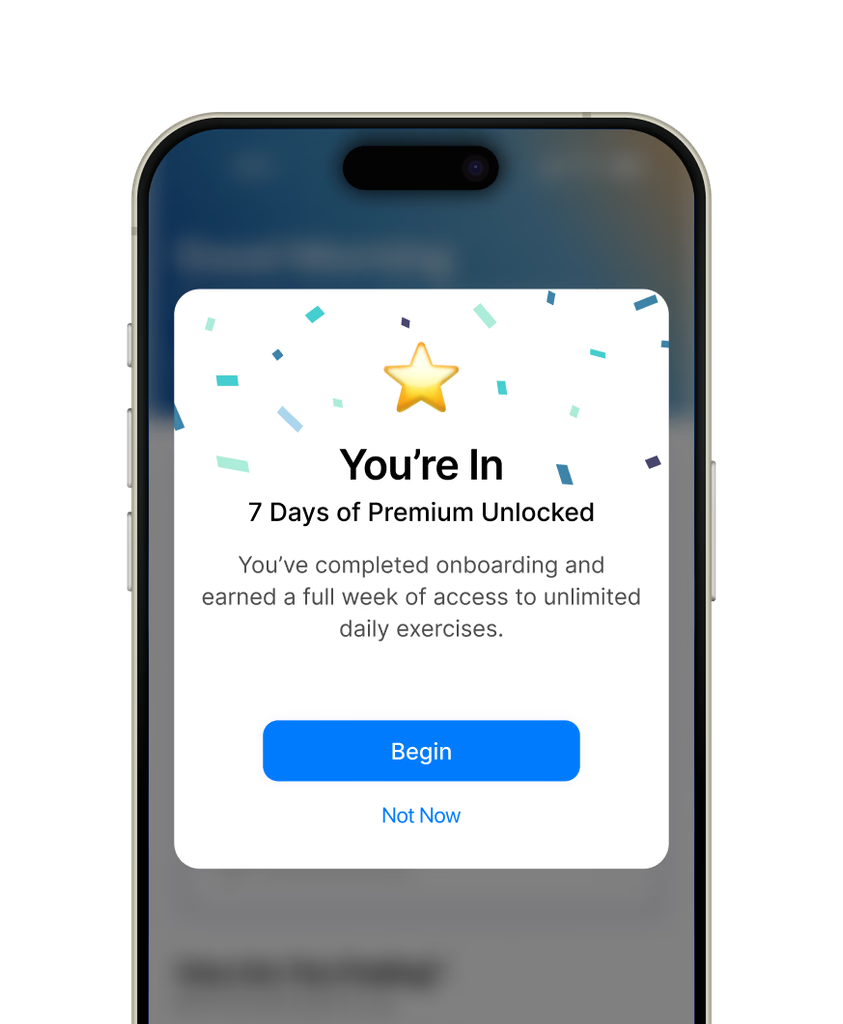
Rewarding
Finish to unlock 7 days of Premium access.
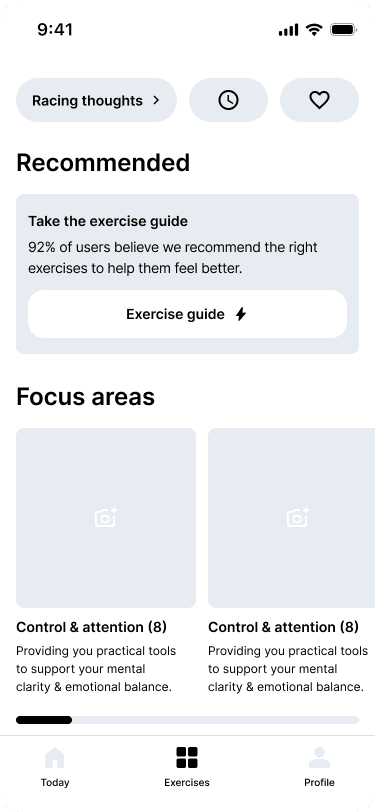
Programs
Structured sessions to build long-term habits.
Curated Collections
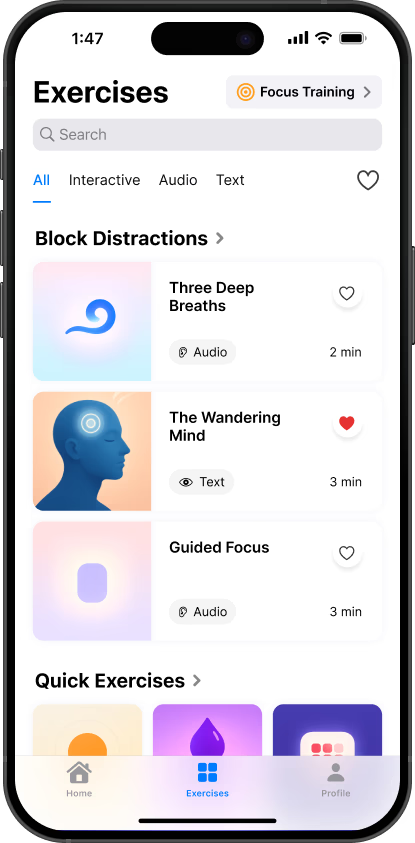
Explore themed content across formats you prefer.
Find What Works for You
Use tabs, search, or favorites to quickly access what you need.

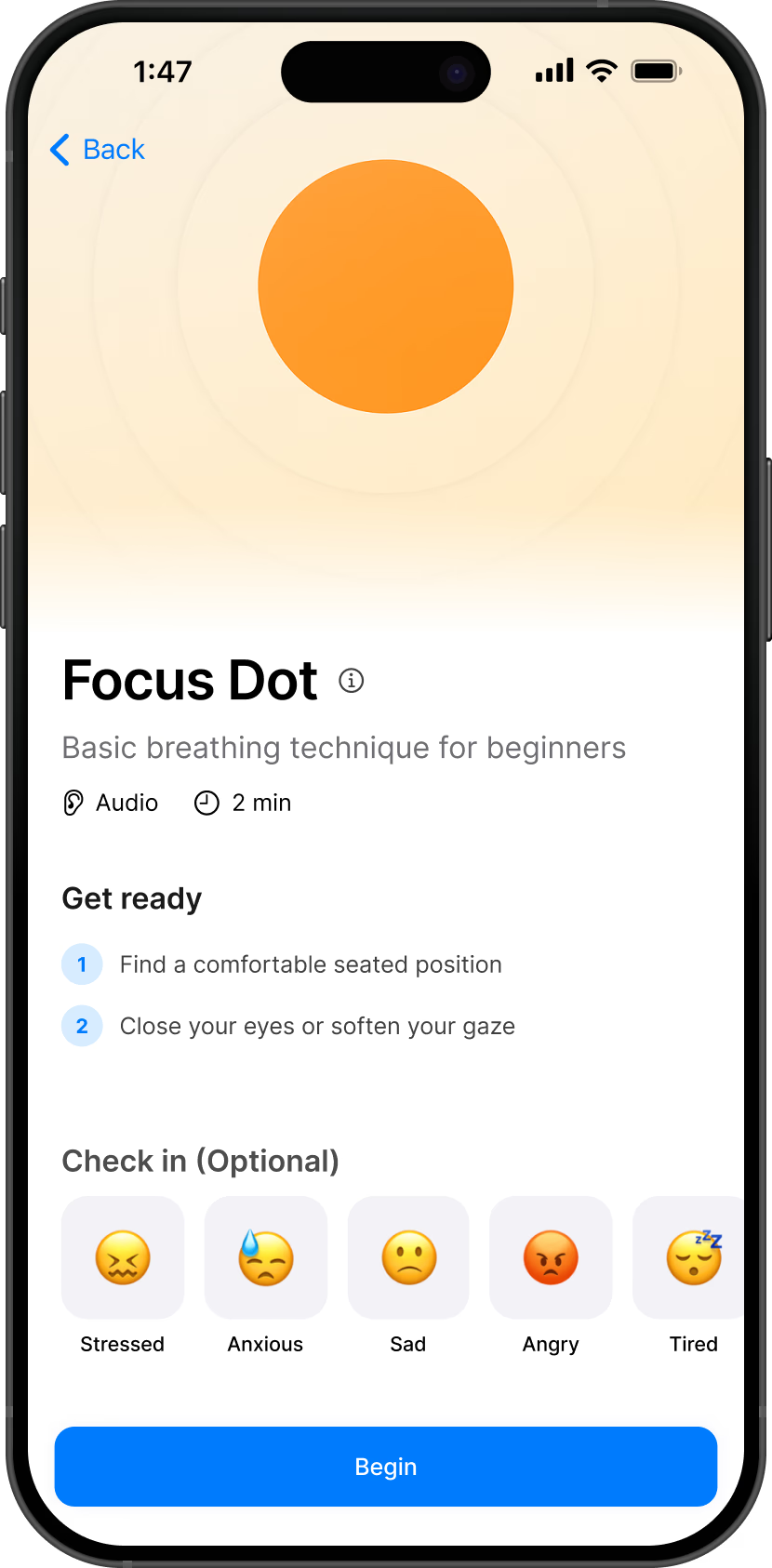
Pre-Exercise
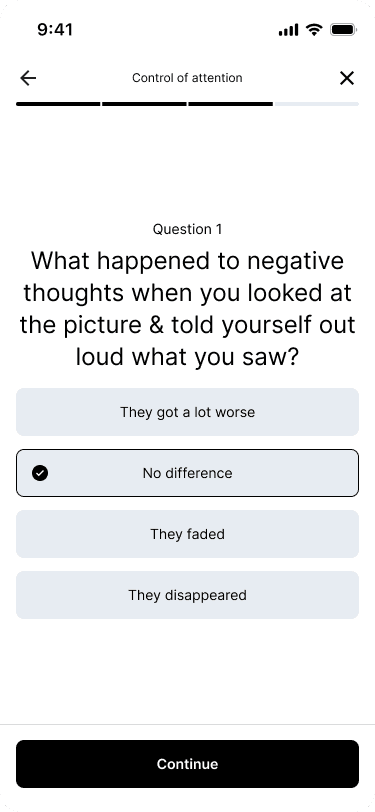
Set your intention and duration before you begin.

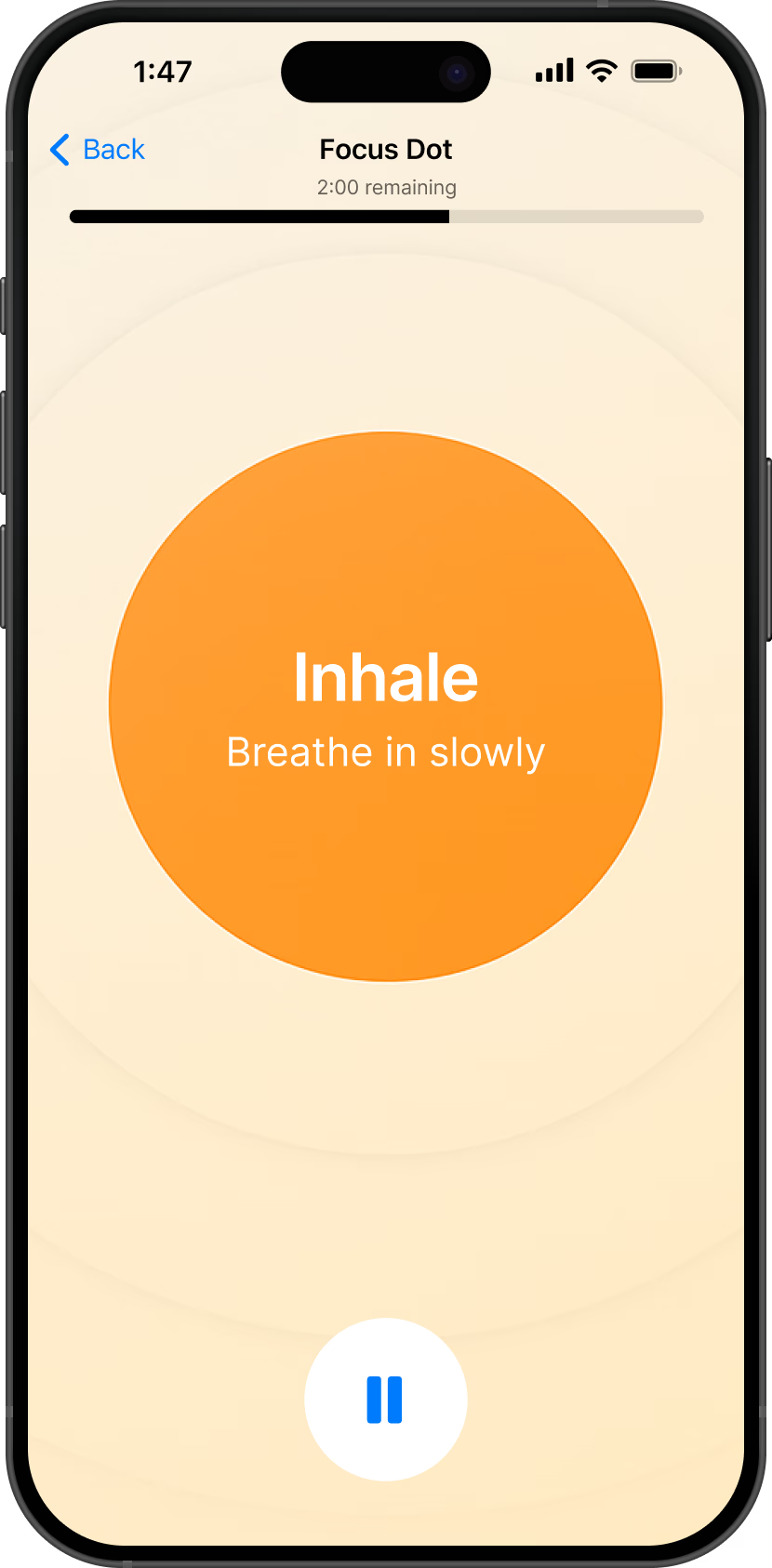
During Exercise
A calm, focused player keeps you in the moment.

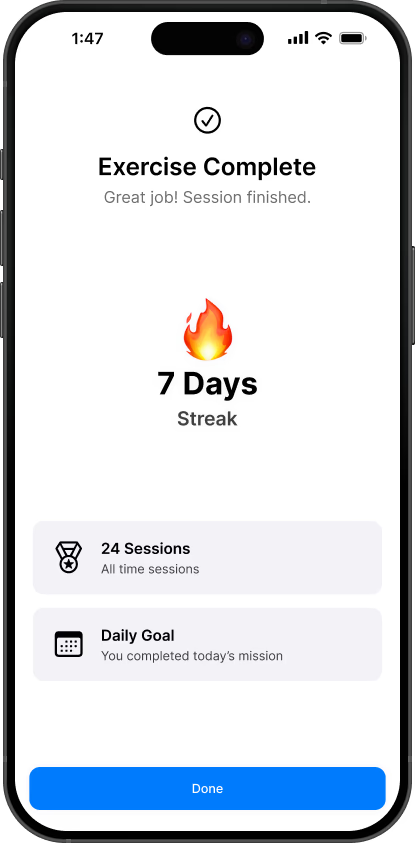
After Exercise
Reflect, track your streak, and see your progress grow.
Collab
Design system
Carry your system everywhere.
80 components, fully documented in Figma. The dev team ships new features 50% faster since handoff.
Handoff
App Store ready.
Passed Apple review on first submission. Helped close a seed funding round with a refreshed investor deck.
Outcomes
SUS usability score
84 pts — up from 52
Task completion
2.1× faster across 5 flows
Up to
+71%
30-day retention
after redesign launch
3
Onboarding steps
down from 11
Time to first action
12 s from cold launch
Reflection
Navigation
Structure is invisible — until it breaks.
Research
Data confirmed what users couldn't articulate.
Onboarding
Ask less, deliver faster.
Design systems
The 80-component library paid off immediately.
More work
Fashion Retail · UX Design
Bershka
Case studySaaS · Product Design
Sheer
Case studyIndustrial · Design Systems
Grundfos
Case study